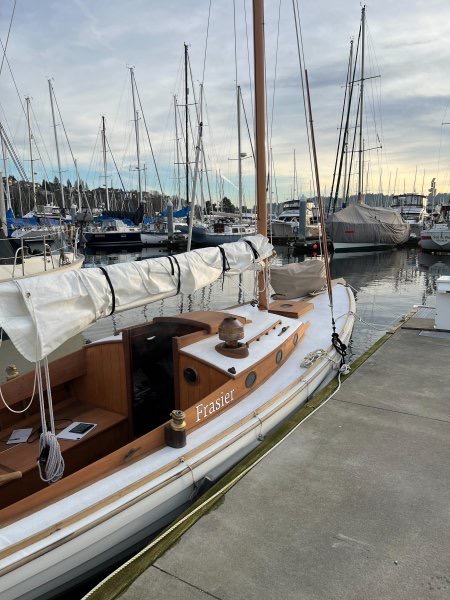
Home Port: Seattle, WA
/
Year Built: 2018
/
LOA: 28'
/
Beam: 7'
/
Owner: William Horner
/
Designer: Scandinavian Sailing Association/Tord Sunden
/
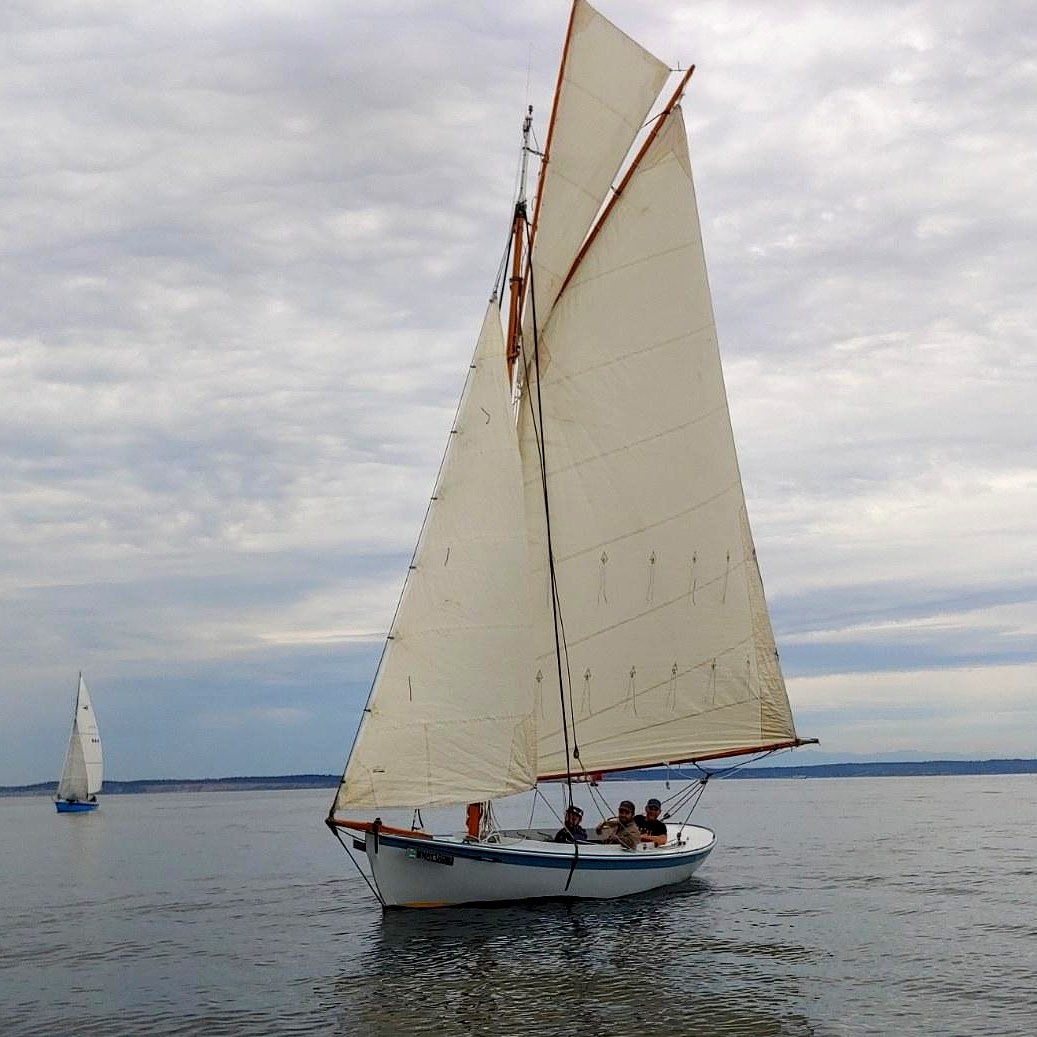
Design: Folkboat
/
Type: Sloop
/
“According to the Folkboat International Association, there are 4,000 Nordic Folkboats on the water today. About 3,000 of them are direct descendants of the wooden Nordic Folkboats first built in 1942.
New Nordic Folkboats are built almost exclusively of fiberglass, using a design introduced in 1977 that mimics the performance of wooden Nordic Folkboats, so they can race in the same class.
“It’s pretty rare to see a new wooden Nordic Folkboat,” Koomen said. “You see a lot of wooden Nordic Folkboats on the water, which is a testament to their construction and the people who are maintaining them, but most of those boats were built in the 1950s and 1960s. It’s not cost-effective to build wooden boats under 40 feet in a production environment.
“So, yes, this boat is super rare.”
The Nordic Folkboat was designed for the rough water and heavy weather of the Baltic Sea. Known for easy handling and extreme seaworthiness, the Nordic Folkboat has an unusually heavy keel — 54 percent of the boat’s overall weight — that allows the boat to carry full sail in 30-knot winds, Cogan said.
Ray Speck, who has built more than 100 boats during his career as a traditional wooden boatbuilder and is regarded as a master of lapstrake construction, came out of semi-retirement to serve as a part-time instructor on the Nordic Folkboat build with Boyle, Cogan said.
“Folkboats have always been a favorite of mine,” Speck said. “The great thing about this boat is the quality of craftsmanship. With student-built boats, there’s more attention to detail. And the Douglas fir vertical grain planking stock on this boat is the best I’ve ever worked with.”The hull construction includes a purple heart backbone, oak framing and Douglas fir lapstrake planking, all copper riveted. The cabin house is made of Sapele.
Nordic Folkboat owners are a big family. Not just in the Bay Area and the Pacific Northwest. Folkboats are all over the world.”
—Peninsula Daily News